
Test Equipment For PAT: Top 10 Tips in Coventry
The UK Portable Appliance Testing Program (PAT), which is a compliance-based program is based on the use of calibration, calibrated, and the correct application of test equipment. The capability of technicians to conduct reliable and accurate safety testing is dependent entirely on the calibrated and quality of their testing equipment. Test instruments must be able to conduct electrical tests in accordance with the IET Code of Practice for Inspection and Testing of Electric Equipment in Service which is regarded as the industry's standard. From advanced portable appliance testers, to simple voltage indicators, every tool is essential in assessing the safety of electrical equipment. Understanding the capabilities, restrictions, and legal obligations surrounding this equipment are essential for anyone who wants to make sure that the testing method they choose to use is not only safe and legal but also legally acceptable.
1. Portable Appliance Tester Itself in Coventry
It is a primary device, an automated safety test instrument. Modern testers range from basic models that perform tests for earth continuity, insulation resistance tests and lead-polarity tests. They also include advanced units which offer additional tests including load/run, earth leakage, or even touch current. One of the key features is the ability to conduct "soft tests" or leakage tests on delicate equipment with electronic components (e.g. computers, printers) that could be damaged by the high voltage applied in a typical insulation test. The type of tester chosen should match the level of complexity of the appliance that are being examined.
2. Annual calibrations are required by UKAS-accredited laboratories in Coventry
This is a mandatory condition to ensure compliance. The United Kingdom Accreditation Service requires that the PAT test is calibrated regularly, usually annually by a laboratory accredited. The calibration ensures that the measurements taken by the device are precise and able to be traced back to the standards of the nation. Each tester must be with an official certificate of calibration. If a test result is invalidated because of an instrument that is not of calibration or not calibrated at all is the result if an incident occurs.
3. Functionality checks performed daily/pre-use
Before starting testing the technician must conduct a regular check of function which is also referred to as"user test" "user test" or "verification test". It usually involves testing a known-good "proof load" or set of test leads. If the tester returns a result that is not the expected result to be expected for this "known-good" product, it may be a problem in the test. The test equipment should not be used until it has received service and calibration. This straightforward procedure is crucial to ensure that the device is functioning properly on when you first use it.
4. The role of visual inspection equipment in Coventry
Although often neglected often, the tools needed for a thorough inspection of the visual are as crucial as the electronic tester. They include screwdrivers to dismantle appliances and plugs, the right fuse rating to replace them and a label printer or labels that are pre-printed for identification of assets and a torch to examine dark areas. This is the point at which most faults are detected. By skimping here, you undermine your entire testing process.
5. Specialised Test Leads and Adapters in Coventry
A skilled technician is outfitted with a variety of tester leads, adaptors, and other accessories to interface every type appliance inlet. There are several types of adaptors to choose from, including standard UK 3-pin connector leads, IEC leads adaptors, which test the detachable leads and clamshell leads as well as the croc clips that test devices that do not come with an outlet, like industrial machines, and adaptors to shaver plugs, commando plugs, and IEC-60309 industrial connectors. Inability to connect correctly can result in an improper test being performed or the test being skipped entirely.
6. Earth Bond Test Lead: Its importance in Class I Equipment
Earth bond testing is essential for testing the earth bond for Class I appliances which need an earth circuit for safety. Test leads for appliances of Class I (those that require an earth) should have large current capacities (5-25A typically) to ensure that the connection is stable. A lead that is not of high quality or inappropriate for the test could result in an inaccurate "pass" result. This could pose an unintentional safety risk. It is important that technicians use the correct lead to conduct the test.
7. Tests for Resistance to Insulation and Voltage Parameters
The test for insulation resistance measures the insulation's integrity through a very extremely high DC (usually 500V) voltage between the live and earth conductors. Technicians must be able to decide which voltage to use and when to stay clear of this test. For instance, on devices with surge protectors (or sensitive electronic components) it is recommended to use a different leakage testing is more safe. The equipment must deliver the correct test voltage specified in the IET code of practice.
8. Presets, Pass/Fail Criteria and Instruments in Coventry
Reputable test equipment has built-in pass/fail guidelines based on the IET Codes of Practice. For instance Earth bond resistance must be 0.1O+R and insulation resistance must be at least 1MO. Transparency demands that the technician is aware of the limits set by the manufacturer and does not change them arbitrarily to ensure an acceptance. The technician should be in a position to confirm the equipment is set according to the industry standard thresholds. This will ensure that the results are consistent and justified.
9. Data management and reporting Capabilities in Coventry
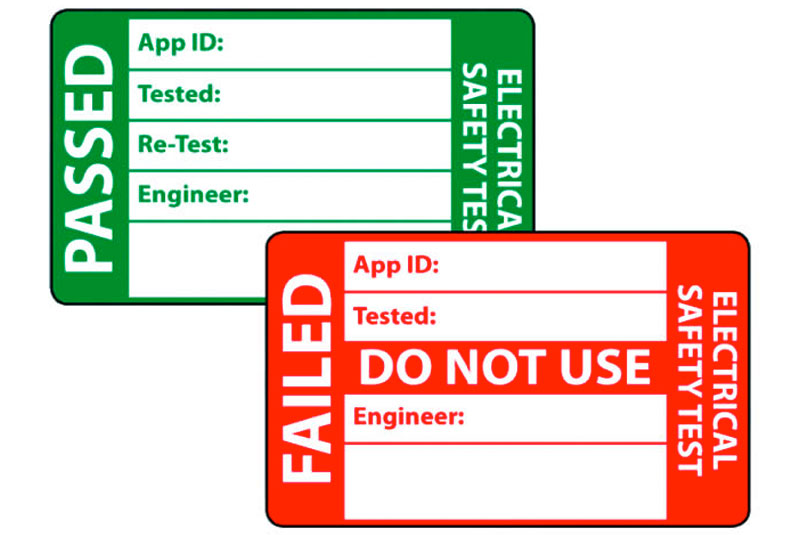
Modern PAT testers are data loggers. They can save hundreds or thousands of test results, which can be later downloaded into software to generate certificates, asset registers and reports of failure. Transparent companies use this feature to provide clear, precise evidence of the work performed. Manual paper recording, an alternative method, is susceptible to mistakes, losses, and falsification. It is not up to industry standards.
10. Secondary Verification Equipment Voltage Indicators and GS38 in Coventry
While the PAT Tester is the main tool for a competent technician, they will also carry a voltage gauge (or voltstick) to ensure that all electrical connections are inactive. This is especially important when replacing a outlet or looking into the cause of a problem. This secondary device is required to conform to HSE guidelines note GS38. It defines requirements regarding safe design. This device adds a layer of protection. See the recommended Coventry portable appliance testing for blog info including extinguisher fire extinguisher, extinguisher company, fire extinguisher testing, fire extinguisher fire, fire extinguisher, fire extinguisher testing, fire electrical extinguisher, extinguisher service, fire extinguisher testing, fire extinguisher service Coventry and more..
Top 10 Tips On Fire Extinguisher Service Certification And Qualifications in Coventry
In the UK There is an established framework for fire extinguisher services that aims to ensure safety, competence and compliance. Unlike certain professions that are required to be licensed by the state and regulations, the "Responsible" person (as as defined by the Regulatory Reform (Fire Safety) Order of 2005) has the obligation to select a skilled professional. It is essential to comprehend the significance of certificates and qualifications since they form a component of any due diligence that is legally required. The market is filled with a diverse variety of providers, ranging including highly accredited firms to individuals, making it crucial to discern the meaning and significance of different certifications. Choosing a technician or company with no credentials may cause insurance to be invalidated, not fulfill legal obligations, and, most critically leaving the building and its the occupants in danger. This guide covers the top ten certifications, qualifications and factors to consider before selecting an insurance company that is a fire safety partner.
1. The Gold Standard: UKAS Accredited Third-Party Certification (BAFE Sp101)
The most important accreditation is registering an organization to the BAFE scheme SP101. BAFE (British Approvals for Fire Equipment), an independent registration agency is the most important certification to look for. The SP101 scheme is designed specifically for the care and maintenance of fire extinguishers that are portable. It is also approved by UKAS (The United Kingdom Accreditation Service), the national sole accreditation body. The scheme has been assessed carefully in comparison to international standards. Accredited by the UKAS, a BAFE SP101 certification is the most tangible proof of a business's competence. It verifies the regular inspection of the firm's operating methods, quality management systems, equipment, technicians and many other aspects.
2. The Alternative Benchmark is FIRAS certification.
FIRAS (Fire Industry Association Recognition and Accreditation Scheme) is a different accredited certification scheme that is run by the Fire Industry Association (FIA). It is a perfect match to the BAFE SP101, both in terms of rigor as well as reputation. FIRAS offers the same assurance that a company was independently assessed and audited to ensure that it is in compliance with BS 533-3. To an individual with responsibility an organization that has either a BAFE SP101 certificate or a FIRAS certificate represents a choice that is competent and compliant. The UKAS accreditation is key.
3. The Foundation: conformity with BS 5306-3 in Coventry
The British Standard BS 5306-3 is the basis for any certification or qualification. This code is the definitive guide to fire extinguisher service. This code must be followed by every technician. It outlines the procedures for regular checks every month and annual maintenance 5 years of extended service for units using water, foam or powder, and 10 year overhauls of CO2 extinguishers. Certifications such as BAFE and FIRAS are used to audit and validate conformance. Ask a company about how they meet the standards when evaluating their work.
4. Individual Technician Competence A: The FIA Units of Competence
While certification by a company is essential however, the work is carried out by individuals. The most recognised individual qualifications are the FIA Units of Competence. These are nationally recognised training modules assessed by National Occupational Standards. The key units consist of:
FIA Unit 001 Maintenance of portable fire extinguishers (Core module)
FIA Unit 010: Overhaul of portable fire extinguishers (Advanced module for extended service)
A skilled technician must hold at least FIA Unit 011. Technicians who provide extended services, such as discharges for five years, must have Unit 010. Ask potential providers about their technicians’ specific qualifications.
5. The Role of Trade Associations (FIA & BAFE) in Coventry
It is crucial to remember that certification doesn't equate with the status of being a member in a trade organization. It's possible for a company to be a part of these associations without having their technical schemes certified. Membership does not prove competency, but rather demonstrates a desire to become an expert and receive the best practice guidance. Do not rely on a generic member logo, but rather the endorsement of a specific technical scheme (e.g. SP101 BAFE).
6. Insurance: Public Liability and Professional Indemnity in Coventry
It is not a matter of debate that a reliable service provider should have adequate insurance. They must have an extensive Public Liability Insurance (e.g., PS5mplus) to ensure they are covered for any accidental damages to your property that occur during their work. Professional Indemnity Insurance also plays crucially in covering the cost of correcting errors made by their employees or advisors. The certification of the company demands that they are insured. However, it's best to inquire the company for proof prior to deciding whether or not you want to employ their services.
7. Manufacturer-Specific Training
BS 5306-3 is universally applicable However, various brands of extinguishers have their own unique designs, valve mechanisms, and procedures for charging. A highly qualified technician will often undergo manufacturer-specific training. This is especially true for the more intricate or difficult extinguisher models, like the clean agent or wet chemicals systems. This type of training will ensure technicians are able to maintain your equipment in a safe and properly without voiding any manufacturer warranties.
8. The process of auditing The way certification is maintained in Coventry
It is important to understand that certification is a continual process. BAFE, FIRAS and other certified businesses are subject to a surveillance audit every year by certified auditors. The audits are not announced and involve examining paperwork and interviewing technicians as well as observing at-site work. These certificates are valuable because they are continuously examined by outside individuals. This ensures that the competence of technicians isn't just examined at a single point in time, but also maintained.
9. The "Competent Person", vs. "Skilled Person".
A legal distinction is made. The Fire Safety Order specifies that maintenance on equipment should be carried out by "a competent person". The law states that the person has sufficient training, experience and experience to properly implement the steps needed. A "skilled tradesperson" is someone who is physically able to accomplish the task. A certified fire extinguisher expert has the knowledge and skills to accomplish the task. They must also have the ability to understand the relevant regulations, standards, dangers as well as the risks.
10. Due Diligence Checking Claims and Certificates
The person who is in charge of the responsibility is responsible for verifying the qualifications. Simply seeing an image on a van or a website is not enough.
Verify Online. Verify Online. BAFE and the FIA both have online directories which allow you to search for a company's information and verify its certification status. in Coventry
You may request certifications: A legitimate company will gladly provide copies of their BAFE or FIRAS certificate along with insurance documents and proof that their employees have FIA certifications. in Coventry
Examine the expiry dates. Make sure that all your certification and insurance policies are up-to-date. in Coventry
This is the best defense against a shoddy service provider. It's also the core of your due diligence. Follow the best fire extinguisher maintenance in Coventry for website tips including fire extinguisher company, fire extinguisher using, fire electrical extinguisher, fire extinguisher fire, fire extinguisher service Coventry, all about fire extinguisher, extinguisher inspections, all about fire extinguisher, testing a fire extinguisher, a fire extinguisher and more. More broadly, have a look at the top electrical testing for more.
