
When people see a link online, they make a quick judgment about whether it looks safe, professional, and worth clicking. A long, confusing URL filled with random letters, numbers, tracking codes, or unfamiliar domains can create hesitation. On the other hand, a clear and recognizable link can immediately give people more confidence.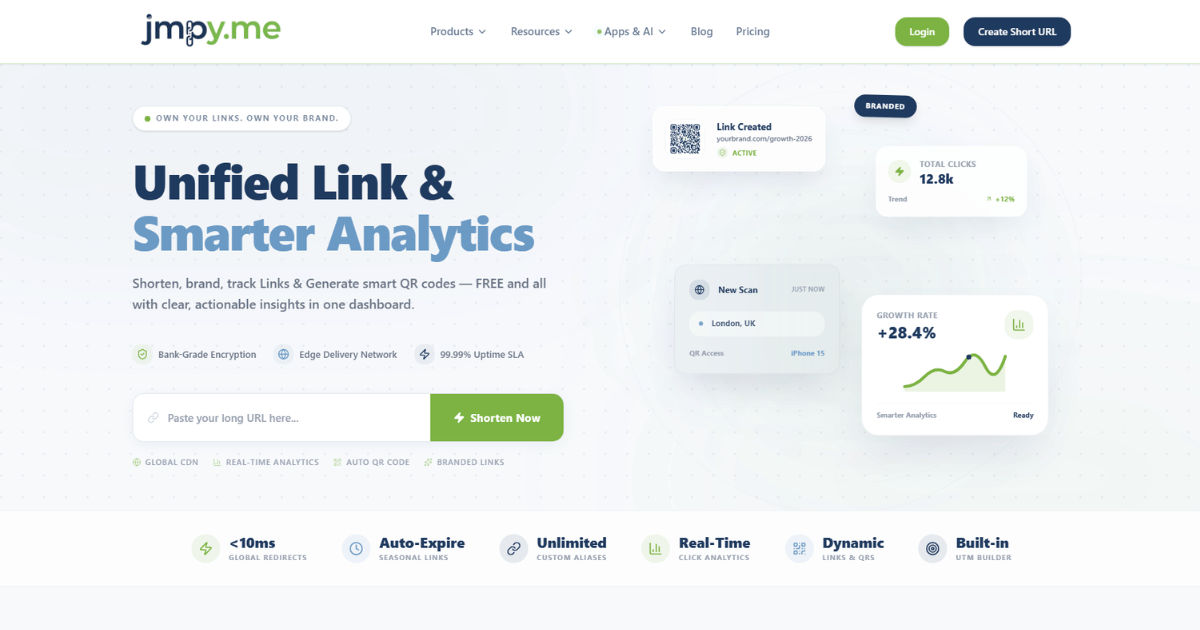 This is where custom branded short links become useful. They allow businesses and individuals to create shorter links that use a recognizable brand name or custom domain, making every shared link look more professional and trustworthy.
Trust is one of the most important factors in online communication. People are constantly asked to click links in emails, social media posts, text messages, advertisements, websites, and digital campaigns. Unfortunately, the internet is also filled with phishing attempts, scams, misleading redirects, and suspicious-looking URLs. Because of this, users have become more careful about where they click.
A branded URL can help reduce that hesitation. Instead of presenting users with an unfamiliar shortened link, a business can share a link that clearly connects the destination to its identity. This small change can influence how people perceive a company before they even visit its website.
Custom URL branding is not simply about making links look attractive. It is about creating consistency, recognition, transparency, and credibility across digital touchpoints. When used correctly, branded links can become part of a broader trust-building strategy that supports marketing, customer communication, brand recognition, and online security.
What Is Custom URL Branding?
Custom URL branding is the practice of using a recognizable brand name, company name, or custom domain within shortened URLs.
Traditional URL shorteners often create links using a generic shortening domain followed by a random combination of characters. These links may be convenient, but they do not always communicate who is sharing them.
A custom branded URL changes this experience. The link can contain a recognizable domain associated with the business or organization. The destination remains short and easy to share, while the visible link gives users a stronger connection to the brand.
For example, imagine receiving a link from a company you have never interacted with before. One link uses an unfamiliar generic shortening domain, while another uses a domain that clearly belongs to the company. The second link is more likely to feel legitimate because the user can immediately recognize the source.
This does not mean that a branded URL automatically makes a business trustworthy. A scammer could also create a convincing-looking domain. However, for legitimate businesses, consistent URL branding adds another layer of credibility to their digital presence.
The main purpose is to make links recognizable and predictable.
When users repeatedly see the same branded domain across social media, email campaigns, advertisements, and customer communications, that domain gradually becomes associated with the company. Over time, the link itself becomes a small but meaningful part of the brand identity.
Why Trust Matters When People Click Links
Clicking a link involves a small amount of risk.
A user may wonder where the link will take them. They may also be concerned about malware, phishing, fake websites, unwanted downloads, or privacy issues.
Even when a link is completely safe, an unclear URL can create uncertainty.
Trust helps remove some of that uncertainty.
When people trust a brand, they are more comfortable interacting with its digital content. They are more likely to open an email, click an advertisement, visit a landing page, download a resource, or complete a purchase.
The challenge is that trust is not built through one action. It develops through repeated experiences.
Every digital interaction contributes to the user's overall impression of a business. Website design, customer service, email communication, social media activity, and even the links a company shares can influence that impression.
A branded link may appear to be a small detail, but small details can have a significant effect when they are repeated across hundreds or thousands of interactions.
Custom URLs Make Links More Recognizable
One of the strongest ways custom URL branding builds trust is through recognition.
People naturally feel more comfortable with things they recognize.
If a customer already knows a company and repeatedly sees that company's name in the links it shares, the link feels familiar. This familiarity can make the user more comfortable clicking.
Consider the difference between a generic shortened link and a branded one.
A generic link might appear unrelated to the business sending it. The user has to rely entirely on context to decide whether it is safe.
A branded link, however, provides an immediate visual connection between the link and the company.
This recognition is especially useful when businesses communicate through multiple channels. A customer might see the same branded domain in an email one day, a social media post the next day, and an advertisement later in the week.
The repeated exposure reinforces brand familiarity.
Over time, users may begin to recognize the branded domain almost as quickly as they recognize the company logo.
Branded Links Look More Professional
Professionalism plays an important role in trust.
People often judge the quality of a business based on small details. A poorly designed website, inconsistent branding, unclear communication, or broken links can make a company appear less reliable.
URLs are part of this experience.
A clean, branded URL can look more polished than a random shortened link. It communicates that the business has taken control of its online identity and pays attention to the details of its digital presence.
This can be particularly valuable for professional services, financial organizations, technology companies, educational institutions, healthcare businesses, and online retailers.
A professional-looking link does not guarantee a professional company, but it supports the overall impression.
When the link matches the company's website, logo, colors, messaging, and other brand elements, the entire customer experience feels more consistent.
Consistency often creates confidence.
Custom URL Branding Creates Brand Consistency
Brand consistency means presenting a recognizable identity across different platforms and customer interactions.
A business may have a branded website, branded email addresses, branded social media profiles, and branded advertisements. If the links inside those channels use unrelated domains, the experience can feel disconnected.
Custom URL branding helps solve this problem.
The same recognizable domain can be used across different campaigns and communication channels. This creates a consistent digital identity.
For example, a business can use branded links in:
-
Email newsletters
-
Social media posts
-
Digital advertisements
-
SMS campaigns
-
QR codes
-
Printed marketing materials
-
Presentations
-
Event promotions
-
Customer support messages
-
Online campaigns
The result is a more unified brand experience.
Customers do not have to understand the technology behind the links. They simply become familiar with the visual pattern.
That familiarity contributes to trust.
Branded Links Help Users Understand the Source
A good URL should provide useful information whenever possible.
When a link includes a recognizable brand name, users can often understand who is responsible for sharing it.
This is especially important when a link appears outside the company's main website.
For example, someone might discover a link through a social media advertisement or receive it in a text message. If the link uses a recognizable branded domain, the user has an additional clue about its origin.
This can be reassuring.
Users still need to remain cautious, but the link itself becomes easier to understand.
The goal is not to hide the destination. The goal is to make the source clearer while keeping the link short and manageable.
That distinction is important.
Custom Branded Links Can Improve Transparency
Trust grows when people feel that a business is being transparent.
A URL that clearly connects to a known brand can support this feeling.
When users recognize the domain, they have a better idea of who is behind the link. This is particularly useful for businesses that run campaigns across multiple channels.
A branded link can also be paired with clear descriptions and calls to action.
Instead of simply telling someone to "click here," a company can explain what the link leads to. The branded domain then reinforces the identity of the sender.
Transparency is not only about the URL itself. It is about the entire experience surrounding the link.
A trustworthy business should avoid misleading link descriptions, deceptive redirects, or URLs designed to confuse users.
The link should accurately represent the brand and lead users to the promised destination.
They Strengthen Brand Recall
Brand recall refers to how easily people remember a business when they encounter it again.
URLs can contribute to this process.
People may not remember every advertisement they see, but repeated exposure to a recognizable brand name can strengthen memory.
When the same branded domain appears repeatedly, users become familiar with it.
For example, a customer may see a branded link in an email, then notice it again in a social media campaign. Later, the customer may encounter the brand in a search result.
The repeated visual association can help connect the different experiences.
This is one reason URL branding should be treated as part of the overall brand strategy rather than simply a technical feature.
The URL becomes another place where the brand can communicate its identity.
Custom URLs Can Increase Click Confidence
A person may hesitate before clicking a link when they do not know where it leads.
This hesitation can reduce engagement.
A recognizable branded URL can reduce some of that uncertainty.
Users may feel more comfortable clicking when the link appears connected to a business they already know.
This is particularly important for campaigns where the link is the main path to the next action.
For example, a business may use a link to send customers to:
-
A product page
-
A special offer
-
A registration form
-
An event page
-
A downloadable guide
-
A booking system
-
A customer survey
If the URL looks trustworthy, the transition from the advertisement or message to the landing page can feel smoother.
The user understands that the link belongs to the same brand they were already interacting with.
Branded URLs Are Valuable in Email Marketing
Email is one of the areas where trust is especially important.
People receive large numbers of emails every day, including legitimate marketing messages and fraudulent attempts.
A suspicious-looking link can cause a user to ignore an otherwise legitimate email.
Branded URLs can help businesses maintain a more professional appearance.
When the link domain matches the brand identity, it reinforces the relationship between the sender and the destination.
However, businesses should not rely on branded URLs alone.
A trustworthy email should also come from a legitimate company address, use clear messaging, provide accurate information, and avoid deceptive tactics.
The strongest approach is to combine branded URLs with responsible email practices.
They Can Improve Trust in Social Media Campaigns
Social media users move quickly.
People scroll through large amounts of content and often make decisions within seconds.
A clear, recognizable link can help a business stand out from the large number of unfamiliar links users encounter.
This is particularly useful for paid advertising.
When a user sees an advertisement from a company, the branded URL can reinforce the identity of the advertiser.
The connection between the advertisement, the brand, and the destination becomes clearer.
This can make the overall experience feel more legitimate.
It is also useful for organic social media content. Businesses can share short links that are easier to remember and visually cleaner than long URLs.
Custom URLs Work Well With QR Codes
QR codes have become common in restaurants, stores, events, packaging, printed advertisements, and product materials.
The problem is that users cannot visually inspect the destination of a QR code before scanning it.
This creates an additional trust challenge.
A branded URL can help address this concern after the QR code is scanned.
If the resulting URL clearly represents the company, users may feel more comfortable continuing.
For example, a customer scanning a QR code on a product package may be more confident when the resulting link clearly connects to the manufacturer's brand.
This creates a more consistent transition between offline and online experiences.
Branded Links Can Support Marketing Campaigns
Marketing campaigns often involve multiple channels.
A company may promote the same offer through email, social media, advertisements, printed materials, and QR codes.
Custom URL branding helps create consistency across these channels.
The same recognizable link structure can be used throughout the campaign.
This makes the campaign feel organized and intentional.
It also helps users recognize that different messages are connected to the same company or promotion.
Trust becomes stronger when customers encounter a consistent experience instead of disconnected messages.
They Can Make Businesses Appear More Established
Perception matters in business.
A company that takes control of its branding often appears more established than one that relies entirely on generic tools.
This does not mean a branded URL makes a small company look like a large corporation.
Instead, it shows that the business is paying attention to its digital identity.
For startups and growing businesses, this can be valuable.
A professional URL strategy can help create a sense of maturity and consistency even while the company is still expanding.
Customers may not consciously think about this, but their overall impression can be influenced by these details.
Custom URL Branding Supports Long-Term Recognition
Trust is built over time.
A company does not become trustworthy because of one branded link. Instead, branded links can contribute to a long-term pattern of consistent communication.
When users repeatedly see the same domain, they become familiar with it.
When the company consistently delivers good products, reliable services, and honest communication, that familiarity becomes stronger.
The branded URL then becomes part of the company's broader trust ecosystem.
This is why consistency is more important than simply creating a branded domain and forgetting about it.
Businesses should use the same recognizable domain across appropriate channels and maintain a clear relationship between the brand and the links it shares.
Trust Depends on More Than a Branded URL
It is important to understand the limits of URL branding.
A branded URL is not a security guarantee.
A user should not assume that every link containing a familiar-looking brand name is automatically safe.
Attackers can create deceptive domains that look similar to legitimate businesses. They can also compromise legitimate websites or use other techniques to mislead users.
For this reason, businesses must combine URL branding with strong security practices.
These may include:
-
Using HTTPS
-
Protecting the custom domain
-
Monitoring links
-
Removing malicious or outdated destinations
-
Using secure account access
-
Protecting administrative credentials
-
Monitoring suspicious activity
-
Educating customers about phishing
-
Keeping websites and systems updated
Trust is strongest when appearance and actual security support each other.
A professional-looking link should lead to a professional and secure experience.
The Importance of Choosing a Good Branded Domain
The domain used for branded links should be carefully selected.
Ideally, it should be short, recognizable, and closely associated with the business.
The domain should also be easy to spell.
A complicated domain can defeat the purpose of branding because users may struggle to remember or recognize it.
Businesses should also consider whether the domain could be confused with another organization.
A clear and distinctive domain makes recognition easier.
Once selected, the domain should be used consistently.
Changing the branded link domain frequently can create confusion and weaken recognition.
Short Links Improve the User Experience
Long URLs can be difficult to read.
They may contain multiple parameters, tracking codes, session information, or complicated paths.
On mobile devices, these URLs can be especially inconvenient.
Short branded links solve part of this problem.
They are easier to read, share, type, and remember.
A shorter link also looks cleaner in printed materials and social media posts.
This improved usability can indirectly support trust.
When a business makes online interactions simple and convenient, customers often perceive the experience as more professional.
Good user experience and trust are closely connected.
Custom URL Branding and Mobile Users
Most online users interact with links through mobile devices.
Mobile screens provide limited space, so long URLs can appear messy.
A clean branded URL is easier to recognize on a smartphone.
This is particularly useful in text messages and social media content.
When users can quickly identify the brand behind a link, they may feel more comfortable deciding whether to open it.
The mobile experience is increasingly important for businesses, making short and recognizable URLs a practical part of digital communication.
Branded URLs Can Support Customer Loyalty
Trust is closely connected to loyalty.
Customers who trust a company are more likely to return, recommend it to others, and engage with future communications.
Branded URLs can support this relationship by creating consistency.
A loyal customer may recognize a company's link without needing to think about it.
This recognition can make future interactions feel familiar.
However, loyalty ultimately comes from the quality of the overall customer experience.
The branded link is simply one small part of that experience.
It works best when supported by reliable service, honest communication, and consistent branding.
How Businesses Should Use Branded Links Responsibly
Businesses should always prioritize honesty when using branded URLs.
The link should accurately represent where the user is going.
If a campaign promotes a specific offer, the link should lead to the promised page.
If a link redirects users through several destinations, the process should still be secure and reasonable.
Businesses should avoid using branding to disguise questionable destinations.
Trust is easily damaged when users feel manipulated.
The goal of custom URL branding should be greater clarity, not deception.
A trustworthy link strategy respects the user's expectations.
How to Build a Trustworthy URL Branding Strategy
A strong URL branding strategy starts with consistency.
First, choose a recognizable domain that fits the business identity.
Second, use it consistently across major marketing and communication channels.
Third, make sure every link leads to a secure and relevant destination.
Fourth, monitor the links regularly.
Broken links can damage the customer experience and make a business appear careless.
Fifth, protect the domain and accounts used to manage the links.
Finally, educate employees about responsible link sharing.
A single careless link can damage the credibility of an entire campaign.
URL branding should therefore be treated as part of the company's broader digital security and communication strategy.
How Custom URL Branding Builds Trust in the Long Run
The long-term value of branded URLs comes from repetition.
The first time a customer sees a branded link, they may simply notice it.
The fifth time, they may recognize it.
After repeated exposure, they may associate it with the business automatically.
This is how familiarity develops.
When familiarity is combined with positive experiences, trust becomes stronger.
For example, if a customer repeatedly receives useful content, helpful offers, and reliable information through links using the same branded domain, the domain itself can become a recognizable sign of the company's communication.
This does not happen overnight.
It requires consistency.
But over time, the link becomes more than a technical pathway. It becomes part of the brand experience.
Common Mistakes That Can Reduce Trust
Businesses can undermine the benefits of URL branding by making avoidable mistakes.
One common mistake is using a domain that is difficult to recognize.
Another is changing domains frequently.
Some businesses also create branded links but fail to maintain them.
A link that stops working creates frustration.
Another problem is using misleading link descriptions.
If users expect one destination but are taken somewhere else, trust can disappear quickly.
Businesses should also avoid excessive redirects.
The more complicated the user journey becomes, the more uncertainty can be created.
Finally, companies should not treat branding as a replacement for security.
A recognizable URL must still lead to a secure and legitimate destination.
Measuring the Impact of Branded URLs
Businesses can evaluate the effectiveness of their URL branding strategy by monitoring user behavior.
Useful measurements may include:
-
Click-through rates
-
Conversion rates
-
Campaign engagement
-
Repeat visits
-
Traffic sources
-
QR code scans
-
Mobile engagement
-
Landing page performance
These metrics can show whether branded links are helping campaigns perform better.
However, trust itself can be more difficult to measure.
Businesses may need to combine quantitative data with customer feedback.
Surveys, customer interviews, support conversations, and user testing can provide additional insight.
The goal is to understand whether customers recognize the links, feel comfortable clicking them, and associate them with the correct business.
The Difference Between Looking Trustworthy and Being Trustworthy
This is one of the most important points to remember.
A branded URL can improve how a company appears, but real trust depends on what happens after the click.
If the landing page is secure, useful, accurate, and professional, the branded link supports the experience.
If the destination is broken, misleading, or unsafe, the branded link cannot save the company's reputation.
In other words, branding can create an expectation of trust, but the actual customer experience must fulfill that expectation.
Businesses should therefore think about the complete journey.
The URL is the beginning.
The website, content, service, and follow-up experience are what determine whether trust continues.
Why Custom URL Branding Is More Important Today
The internet has become more crowded and more difficult to navigate.
Users encounter suspicious messages, fake advertisements, phishing attempts, and misleading links regularly.
As a result, people have become more cautious.
Businesses must work harder to communicate legitimacy.
Custom URL branding is one practical way to create a more recognizable digital identity.
It cannot eliminate online risks, but it can make legitimate businesses easier to identify.
When combined with good security and honest communication, branded URLs can become a useful trust signal.
This is especially important as companies communicate with customers across more platforms than ever before.
Conclusion
Custom URL branding builds trust by making online links more recognizable, professional, consistent, and connected to the identity of the business sharing them. A URL may seem like a small technical detail, but every customer interaction contributes to the overall perception of a brand.
When users see a recognizable branded domain, they have more context about who is behind the link. This can reduce uncertainty and make the experience feel more professional. Repeated exposure can also improve brand recall, allowing customers to become familiar with the company's digital identity over time.
The value of custom branded short links becomes even clearer when businesses use them consistently across email, social media, digital advertising, QR codes, text messages, and other communication channels. Instead of presenting users with unrelated or confusing URLs, the business creates a consistent visual connection between its brand and its online destinations.
However, businesses should remember that a branded URL is not a guarantee of safety or trust. It is only one part of a much larger strategy. Real trust comes from combining professional branding with secure technology, honest communication, reliable services, accurate information, and a positive customer experience.
The best URL branding strategies are therefore built around transparency. A business should make it easy for users to understand who is sharing a link and where that link is intended to take them. The URL should support the user's confidence rather than attempt to hide information.
Over time, this consistency can become valuable. Customers begin to recognize the branded domain, associate it with the company, and feel more comfortable interacting with links that use it. That familiarity can support stronger engagement, better campaign experiences, and deeper relationships between businesses and their audiences.
Ultimately, trust is built through many small signals. A recognizable URL is one of those signals. It may not be the most visible part of a brand, but it can quietly reinforce credibility every time someone encounters it.
For businesses operating in an increasingly crowded digital environment, that matters. When every click represents an opportunity to build or lose confidence, creating a clear and consistent link identity is a practical step toward a more trustworthy online presence.
The strongest approach is simple: make your links recognizable, keep them secure, use them consistently, and always deliver the experience users expect after they click. When those elements work together, URL branding becomes more than a design choice. It becomes a meaningful part of how a business communicates trust.